
You hit send on another email, and then nothing happens. No replies. No clicks. Just quiet, while the list you built scrolls straight past you.

Every marketer wants high-response emails. Most of us just never learned the small choices that create them.
That quiet costs more than it looks like it does. Every ignored email is a sale you did not make, a relationship you did not build, or a subscriber one step closer to unsubscribing.
The good news is this: the fix is rarely a bigger list or a brand new topic. It is usually five or six small choices inside the email itself.
I have pulled together five small, honest tweaks that build high-response emails, tested across years of sending to real subscribers. None of them need new software or a bigger budget.
One takes less than a minute to add. If your emails have gone quiet lately, this is where I would start.
Give Your Subject Line One Job
Your subject line has exactly one job: earn the open. Nothing else in the email matters if that first line fails to pull you in.
Here is the mistake I see again and again. People try to summarize the whole email inside the subject line. That kills curiosity before your reader has even opened it.
Instead, give the subject line one clear promise or question, then let the email itself deliver the detail. A few patterns work again and again, for me and for the publishers I coach:
“The quick way to get [a result your reader wants]”
“What happens when you finally [do the thing they keep avoiding]”
“Who else wants [a clear, specific benefit]?”
Notice what these all share. Each one puts you, the reader, at the center of the sentence, not me and not my product.
That single shift, from talking about yourself to talking about your reader’s result, creates more high-response emails than any clever trick. I have tested plenty of tricks across twenty-five years of sending emails, and this simple shift still wins.
Rewrite your next subject line around your reader’s result instead of your own announcement. It is a small change, and it is usually the first thing I fix when a publisher asks me why their emails have gone quiet.
Keep a simple swipe file of subject lines that make you stop and open an email, no matter who sent it. Borrowed structure, filled in with your own honest promise, beats a blank page every time.
Send A Sequence, Not A Single Email
One email rarely changes anything. Your reader might be busy, distracted, or simply not in the right mood that day. A single message asks a great deal of one small moment in someone’s life.
A short sequence works far harder. Three or four connected emails, spaced a day or two apart, give your idea room to land properly. Each one can add a fresh angle: a story, a specific benefit, an honest answer to a common objection.
I have watched publishers double their results just by turning one lonely email into a short series that built on itself. Nothing else changed. Same list, same offer, same amount of writing time, simply spread differently across a few days.
That compounding effect is worth remembering. A sequence you build once keeps working every time a new subscriber joins your list, long after you have moved on to writing the next one.
If you are only sending single emails right now, this is the cheapest win on this whole list. You already have the ideas sitting in your head or your notes. You just need to spread them across three or four emails instead of squeezing everything into one.
Think of your sequence as a short conversation rather than one long speech. A conversation gives your reader time to warm up, ask their own questions in their head, and arrive at your ending ready to say yes.
Segment Before You Send
Sending the same email to your entire list flattens your results. A brand new subscriber and a five-year reader do not need the same message. Treating them as if they do costs you replies from both.
Start simple. Split your list by what someone asked for when they joined, what they have already bought from you, or how they first found you. Even one or two segments beat none at all.
I have written more about building and organizing a list the right way in other posts I have shared recently. I will not repeat all of it here.
The short version: a smaller, well-matched email almost always beats a bigger, generic one. Your emails perform better not because you found a clever trick, but because the message finally fits the person reading it.
Segmenting is not about tracking every click your reader makes. It is about respecting that the person on the other end of your email is a real individual. They have their own reasons for being on your list, not just a row in a spreadsheet.
Give Your Reader One Clear Next Step
Every email should end with one obvious next step, not three vague ones. If you give your reader five different links and two competing offers, most will click on nothing at all.
Choose one thing you want your reader to do, and say it plainly. Not a vague nudge, but the real thing waiting on the other side. Watch a specific video, read a specific page, or reply with a specific word.
A touch of honest curiosity near that next step helps too. You do not need a trick or a gimmick. A simple, true line like “here is the part most people miss” pulls a reader in without ever misleading them.
I ask myself one question before I finalize the ending of any email. If my reader stopped reading right after this line, would they know exactly what to do next? If the answer is no, I rewrite it until it is yes.
Clarity beats cleverness here every time. A confused reader does not reply. A reader who knows exactly what happens next usually will.
I have seen a two-line note with one honest next step outperform a long, polished email packed with options. Fewer choices, not more content, usually wins.
Let The P.S. Do Some Of The Work
Most people skip straight past the P.S. when they write an email. Most readers do the opposite. It is one of the most read parts of any email you send, scanned even by people who read nothing else in the message.
Use it well and it earns its place. Remind your reader of the one thing you most want them to do. Add a specific detail you left out of the body.
Tease what is coming in your next email so they watch for it. A good P.S. takes thirty seconds to add and can lift your results on its own. It turns an ordinary note into one of your high-response emails.
Of the five tweaks here, it is the smallest change and often the fastest one to see working.
Pick One And Send It Today
A few years back I hosted a small workshop in the UK, and Marlon Sanders flew in from Texas to speak to the room. Partway through his talk, he asked how many people had a product that was half finished. Almost every hand went up.
Marlon stopped and said something I have never forgotten. Things are either done or not done. There is no such thing as half done.
Things are either done or not done.
If it is not done, you cannot sell it, and the room went quiet.
The same is true of your emails. A sequence that only exists in your head sells nothing. A subject line you are still tweaking sends nothing.
Pick one tweak from this list. Write the email. Send it today.
You can improve the next one once this one is out in the world, doing its job, earning you real replies instead of silence.
Everything in this post comes from the same well I keep drawing from with my own list: the Serious About Six Figures training. It is the ongoing program I built for publishers who already have a product. It is for anyone who wants steady, growing income instead of chasing the next shiny idea.
If today’s five tweaks felt useful, the training goes much further. Inside it you will find real subject line testing and full email sequences broken down step by step. You also get the exact segmentation approach I use inside my own business.
The next step from here is simple. Visit SeriousAboutSixFigures.com and see what a full month of training looks like for yourself.
Five small tweaks, sent one email at a time, is truly all it takes to start hearing from your list again. Pick one from today’s post and use it on the very next email you write.
I am cheering you on with this one, the same way I have been for twenty-five years of watching ordinary publishers build real, lasting businesses.
Nick James
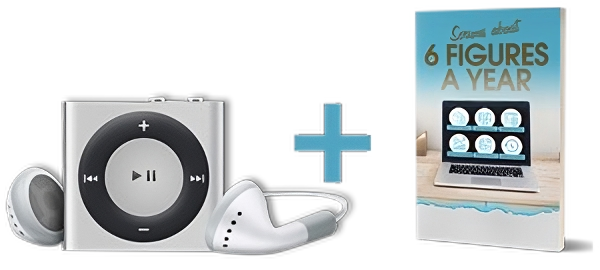
Claim Your Free MP3 And PDF Training: The 3-Part Plan To Topping $100,000 Per Year In Profit
Enter your name and email address below to receive a new lesson delivered to your inbox once a week. Your first lesson will be delivered immediately.
Privacy Policy : We value your privacy. You can unsubscribe from receiving future emails with 1 click at any time.