
You wrote a good page. The headline pulls. The first paragraph earns a nod.

Then your reader reaches the end of one idea, and the next one starts cold. That gap is where they leave.
It is a tiny bump, a half-second pause where the page stops carrying them and starts asking them to decide. Most readers decide to close the tab.
You never see it happen. The reader just goes quiet, and your best point goes unread. It happens to every writer I know.
The fix costs you nothing. Transition phrases are short bridges that carry your reader across the seam from one thought to the next. Used well, they keep people reading long after they would have quit.
Here is how these bridges work, where to place them, and a handful you can borrow today. Your emails, pages, and posts will read smoother, and more of your readers will reach the end.
Why Your Readers Leave At The Seams
Think about the last long page you left. You did not hate the writing. Something small broke your grip.
Every page is a chain of ideas. Each link holds well on its own. The weak point is where two links meet.
At that seam, your reader asks a silent question: why should I keep going? If the page does not answer, your reader answers for it. With a click, in most cases.
I hit this wall myself when I started writing sales letters and speaking on stage. I would finish one point and feel an awkward bump before the next. On paper it looked clumsy. On stage it felt like an embarrassing pause.
Over the years I found words and phrases that made those moves easy. I collected 101 of them into one list. I use them as separate lines or as subheadlines, and in my experience they almost compel readership.
At that seam, your reader asks a silent question: why should I keep going?
Your response is far greater when your copy gets read. Reading comes first. Everything else follows.
Long Pages Have The Most Seams
A page needs to be as long as it takes to make its point, and not a word more. Some pages need four sides of paper. Some need sixteen.
Length is not the problem. Think of a hobby you love. You would read a long page about it with pleasure, because every line holds your interest.
Now count the seams in a long page. A four-page letter has dozens of them. Each one is a place where your reader can slip out the side door.
That is why the longer your page, the more it needs bridges. They keep the page interesting at every join, so length never turns into a burden for the reader.
What A Bridge Phrase Does For Your Reader
A good transition phrase does three jobs in about four words.
It tells your reader something is coming. It promises the next piece is worth having. And it gives the eye a place to rest before it moves on.
Here are a few from my own list:
“And that’s just the beginning.”
“Here’s the important point.”
“And here’s the kicker.”
“So, what do you think happened next?”
Read those again. Not one of them teaches a thing. Each one gives your reader a reason to read the next line.
That is the whole job. You are not adding content. You are adding momentum. If you enjoy ideas like this, you will find more in other posts I have shared lately.
Say each one out loud and notice how it sounds. Every phrase is something you would say across a kitchen table to a friend. That is why they carry a reader so well.
See The Difference In Two Short Versions
Say you have written this:
“The guide has ten short lessons. Each lesson ends with a checklist. There is also an audio version.”
Nothing is wrong with it. But your reader gets three facts in a row and no reason to hold on. Now add two bridges:
“The guide has ten short lessons. Each lesson ends with a checklist. And that’s not all. There is also an audio version. What does this mean for you? You can finish a lesson without ever touching a screen.”
Same facts. Two small bridges. The second version sounds like a person talking to you, and that is the feel you want.
Match The Bridge To The Job
Not every bridge fits every seam. Sort your transition phrases by what your page needs at that moment.
Bridges that add. Use these when you stack up reasons or proof. “And that’s not all.” “Here’s even more proof.” “It just keeps getting better.”
Bridges that turn. Use these when the page changes direction. “The flip side holds the real key.” “You may be asking the wrong question.” “Here’s the fatal flaw.”
Bridges that ask. Use these to pull your reader into the page. “What about you?” “What does this mean for you?” “Does the system work?”
Bridges that land. Use these when you wrap up a point. “The simple truth is this.” “What’s the bottom line?” “I’ve saved the best for last.”
Keep a short list of your favorites where you write. When you reach a seam, you will not stall or reach for a tired phrase. You will pick the bridge that fits and keep moving.
Pick the type first. Then pick the phrase. A bridge that turns, dropped where you meant to add, sends your reader the wrong way.
Where To Place Them On The Page
Put each bridge on its own line. Or use it as a subheadline. Either way, give it room to breathe.
Then place it where attention tends to dip. Before a long stretch of detail. After a strong claim, so the claim has time to land. At the point where you change topics. And just before you ask for action, which always belongs at the very end.
One bridge per section is plenty. Your page should read like a chat with a good friend, not like a game show host shouting “wait, there’s more” every third line.
Write the way you talk. Most people read at about a 12-year-old level, so plain words win. Your copy does not need perfect grammar. It needs to flow like a conversation.
Bridges Belong In Your Emails Too
The same seams show up in every message you send. A subscriber reads your first paragraph on a phone, thumb hovering over the screen.
Place one short bridge line between your story and your point, and that thumb stays put. The same goes for blog posts, video scripts, and the notes you send to customers.
Anywhere one thought hands off to the next, a bridge earns its place. Anywhere the hand-off is already smooth, leave it alone.
Where Bridges Go Wrong
A bridge is a promise. If you write “Here’s the kicker,” the next line must kick. A bridge that leads nowhere teaches your reader to skip your bridges.
Do not stack them, either. Two in a row sound like clearing your throat.
Fit each phrase to your own topic. Some in my list belong to one subject. Take “Warning: All calcium is not equal.” It suits a health message and nothing else. Reword it so it fits yours.
The best bridges sound like you. If a phrase sounds like a stranger wrote it, change it until it sounds like your own voice.
A Five-Step Test For Your Own Page
You do not need new software to check your copy. You need your own voice and a few quiet minutes.
First, read your draft aloud from top to bottom.
Second, mark every spot where you stumble, pause, or take a breath you did not plan.
Third, choose a transition phrase that matches the job at each mark: add, turn, ask, or land.
Fourth, read it aloud again. Cut any bridge that sounds forced.
Fifth, hand the page to a friend and ask where they would stop reading. Fix that spot next.
You do not need to rewrite everything at once. Start with the page that already gets the most visits, and run the test on that one first.
If you have the time, put the draft away for a week. Then read it with fresh eyes. You will spot seams you missed before.
Where To Go From Here
If you want to go further, the next step is OneLetterFromRetirement.com.
It is my step-by-step training for writing a sales letter that reads like a personal note from me to you. It guides you from the first rough draft to the final read-through, where each paragraph must flow into the next. The Magic Transitions report inside it lists all 101 of my favorite bridge phrases, ready for you to borrow.
So the bridges you met here have a full letter to live in.
Every reader you keep is one more person who hears your idea through to the end. Your words deserve that. Small joins make a big difference to how your writing feels. Pick one page this week, read it aloud, and drop a bridge where it stumbles.
I am rooting for you.
Nick James
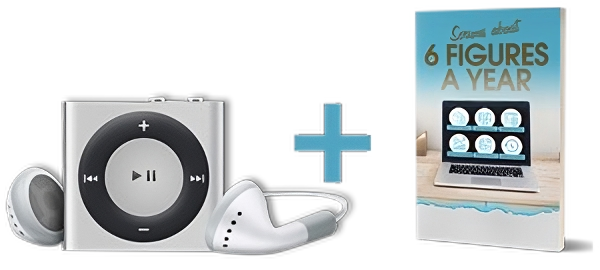
Claim Your Free MP3 And PDF Training: The 3-Part Plan To Topping $100,000 Per Year In Profit
Enter your name and email address below to receive a new lesson delivered to your inbox once a week. Your first lesson will be delivered immediately.
Privacy Policy : We value your privacy. You can unsubscribe from receiving future emails with 1 click at any time.